Fiqh
Purification, prayer, fasting and other practical rulings using Fiqh al-Sunnah, with recognised differences explained where appropriate.

The afternoon Madrassah is part of the school programme, helping learners grow in recitation, understanding, worship, manners and responsibility.
Qur’an learning starts from each learner’s current level. Teachers prioritise accurate recitation and consistent revision before increasing memorisation.
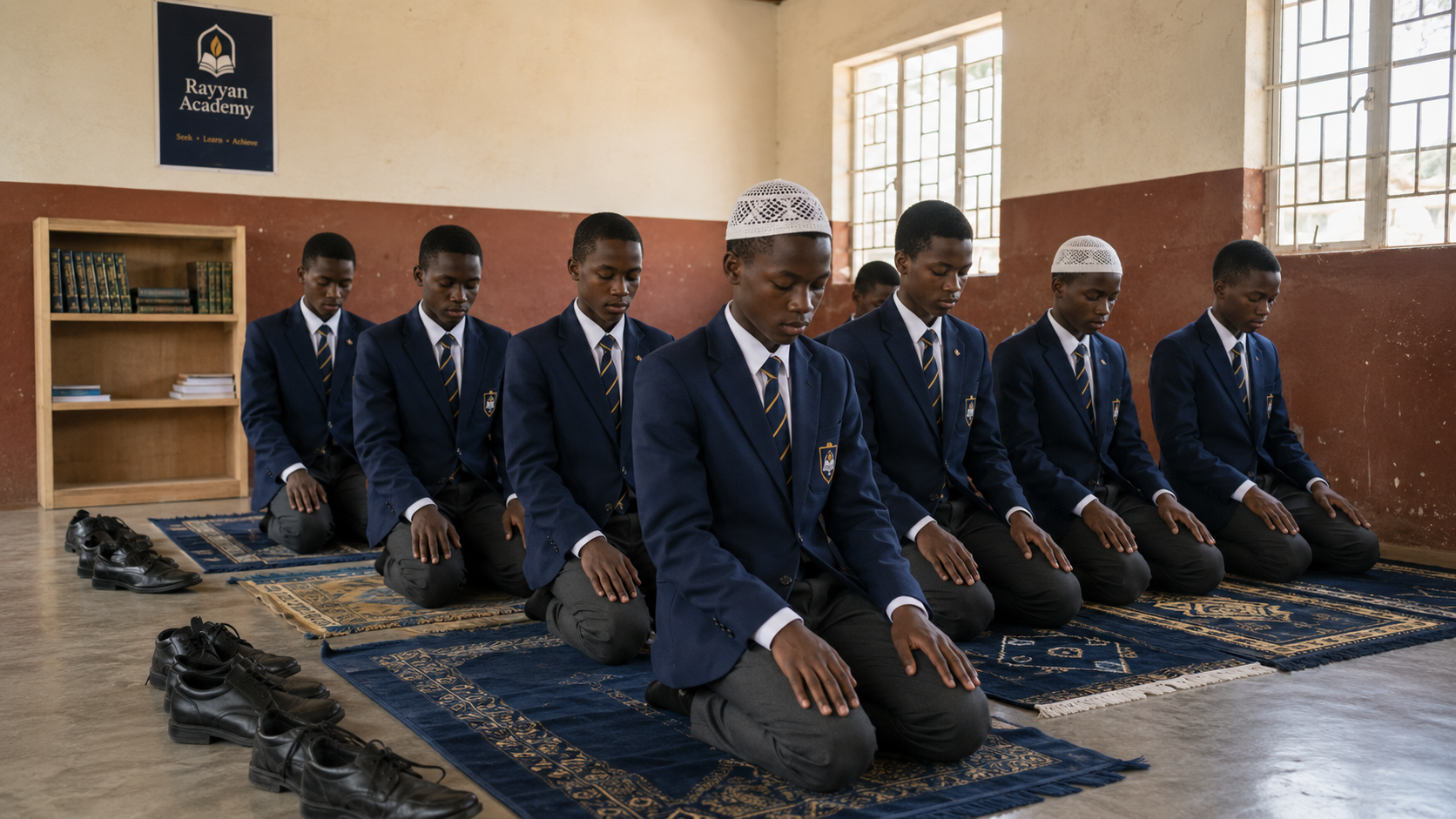
Prayer, Qur’an, discipline and good conduct are woven into the rhythm of every school day.
Using a structured progression based on Al-Arabiyyah Bayna Yadayk, learners develop practical Arabic through speaking, listening, reading and writing.
Classroom instructions, guided listening and growing familiarity with everyday Arabic.
Useful vocabulary, sentence patterns and supported conversation.
Graded passages, vocabulary development and confident connected reading.
Handwriting, spelling, dictation and progressive written expression.
Lessons follow a progressive programme suited to secondary learners and encourage respectful understanding of recognised scholarly differences.
Purification, prayer, fasting and other practical rulings using Fiqh al-Sunnah, with recognised differences explained where appropriate.
Foundations of belief and selected prophetic teachings linked to worship, conduct and daily decisions.
The life of the Prophet ﷺ and Islamic manners taught for practical application at school, at home and in society.
Madrassah learning is reinforced through congregational worship, boarding routines, academic discipline and positive relationships.